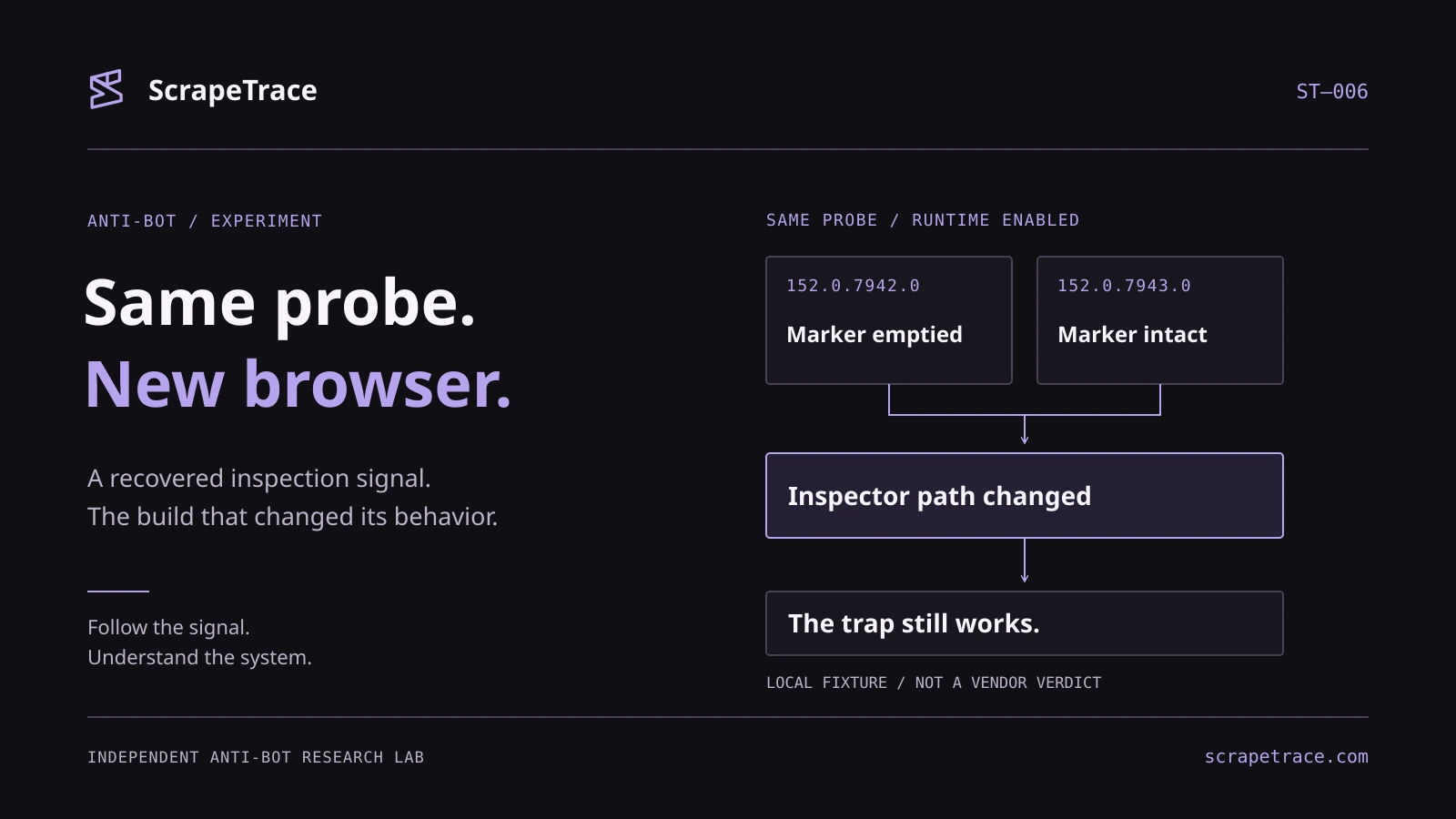
When Chrome Stopped Triggering a DataDome Inspection Probe
A recovered DataDome Proxy probe emptied an array during console inspection. Adjacent Chrome builds show exactly where that signal disappeared.
12 min read
INDEPENDENT ANTI-BOT RESEARCH LAB
Independent research into anti-bot systems, browser identity, scraping infrastructure, and difficult web extraction.
Reproducible methods. Transparent limitations.
Anti-bot systems / Browser identity / Extraction challenges / Scraping infrastructure
CORE RESEARCH / ANALYSIS
 ST—007
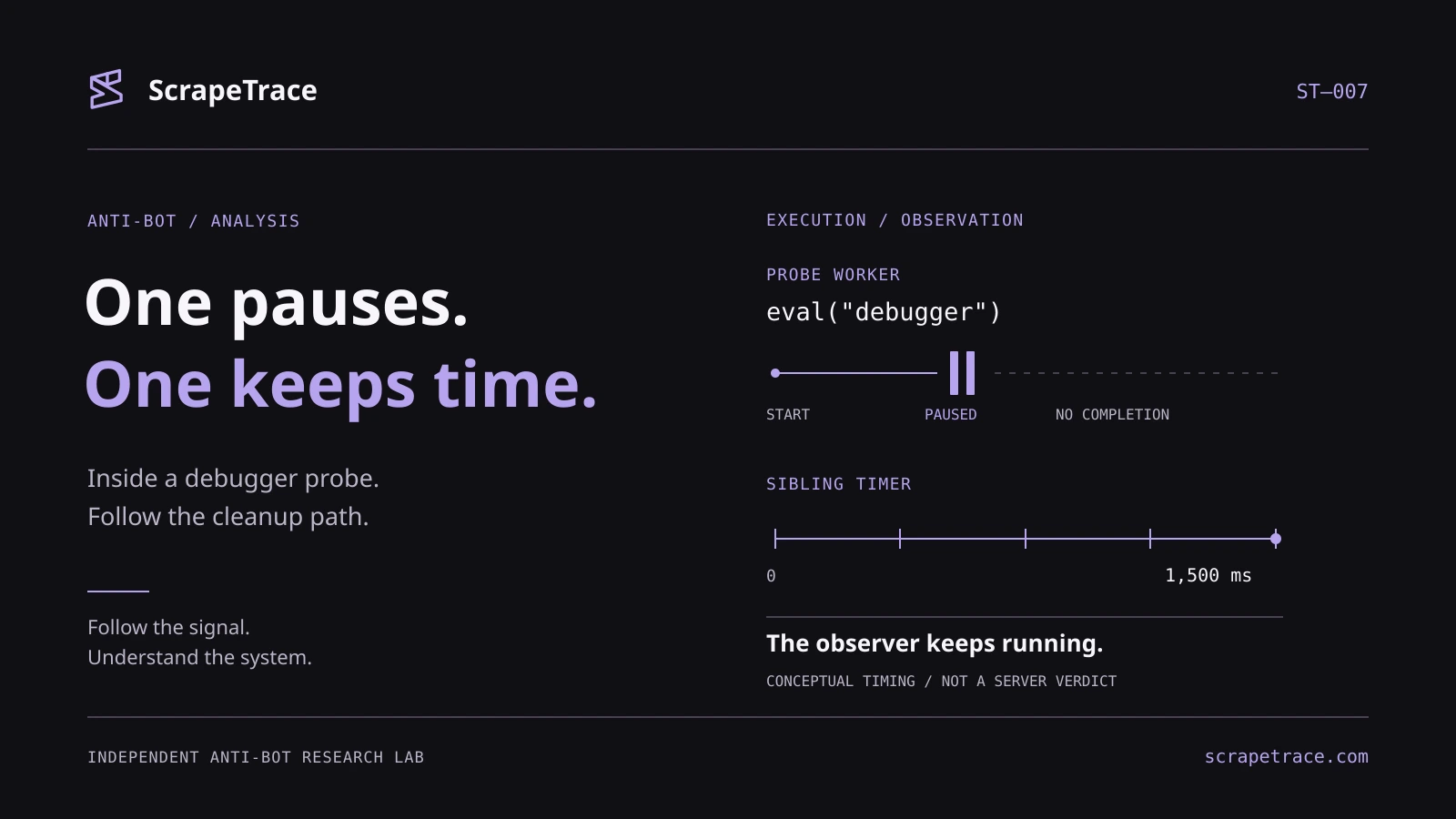
A paused Worker disappears after 1.5 seconds. We trace Cloudflare's start and completion messages, sibling timer, cleanup paths and client-side result.
Read the investigation · 15 minA recovered DataDome Proxy probe emptied an array during console inspection. Adjacent Chrome builds show exactly where that signal disappeared.
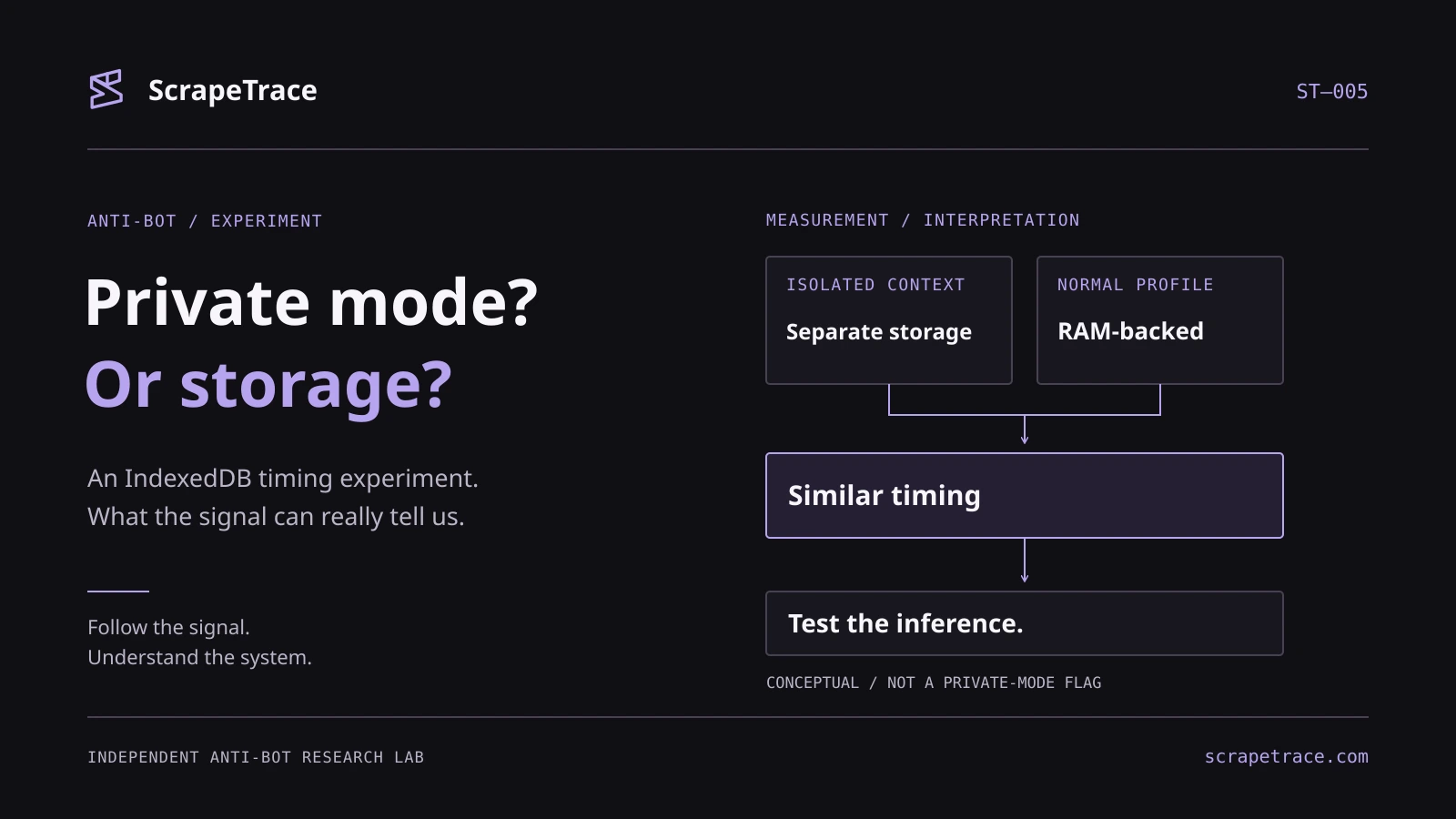
An independent test of private-mode inference: 240 Chrome experiments, strict versus relaxed IndexedDB writes, and a RAM-backed profile that breaks the assumption.
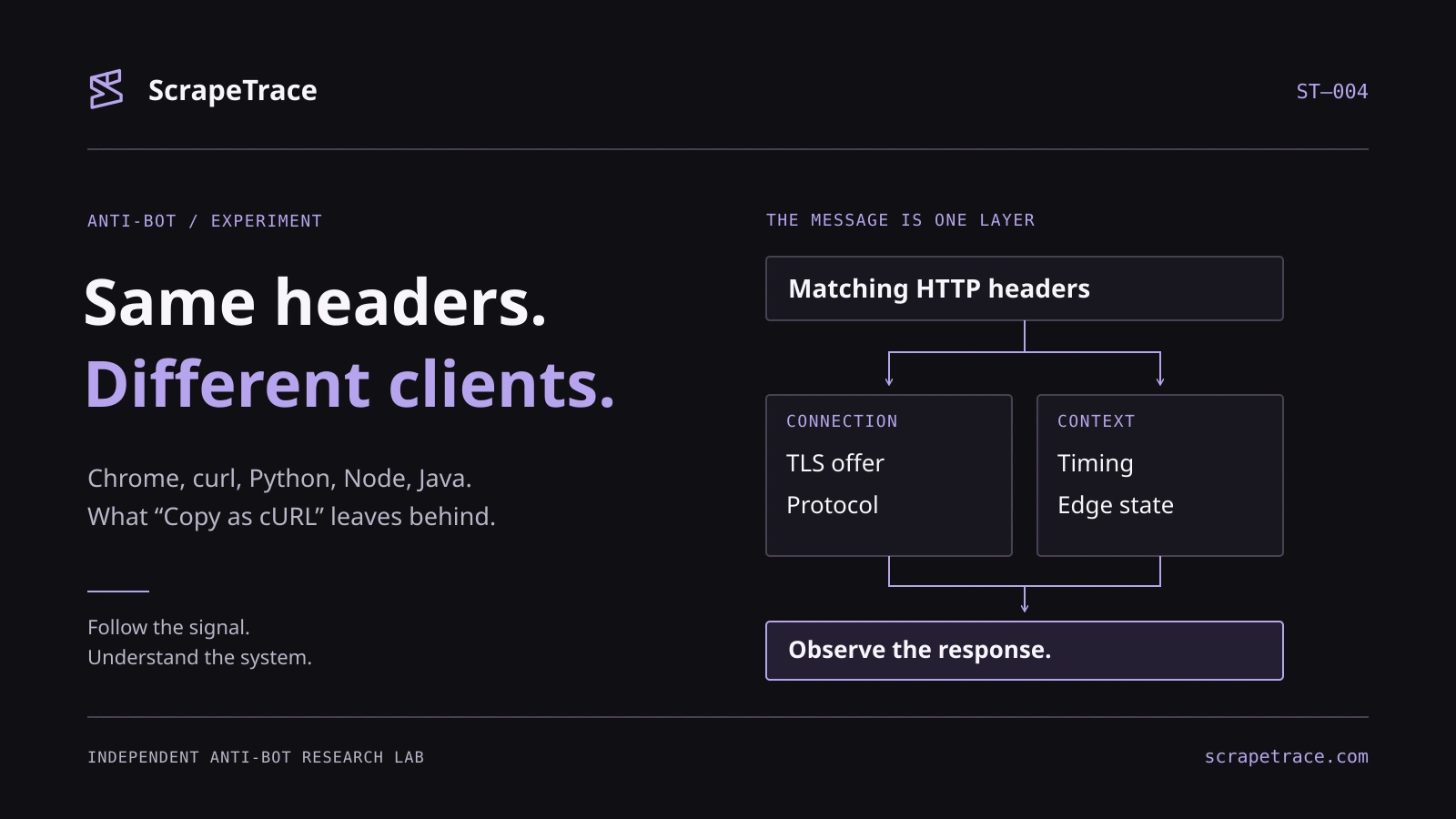
Chrome works, copied headers fail. A cross-client experiment with curl, Python, Node and Java, followed by ALPN controls and browser-profile clients.

A graphics-stack comparison of eight scraping providers: software-renderer claims, cross-API identity mismatches, and differences between page and worker behavior.

An analysis of a DataDome custom VM snapshot: bytecode execution, recovered structure, browser-signal collection, and the limits of causal attribution.

Why readable web pages can yield incorrect extracted text: font-based obfuscation, source/rendering mismatches, and the limits of font-aware recovery.

Compare browser identity, rendering, automation observations, and imported TLS/HTTP fingerprints across two clients with TracePrint.

Explore why source text can differ from rendered content, and how ShieldFont Decoder recovers copyable Unicode from reversible OpenType font mappings.
THE SCRAPETRACE APPROACH
Show the setup. Record the failure modes. Separate an observation from an explanation. Give readers enough context to reproduce the work.
Read our methodology